
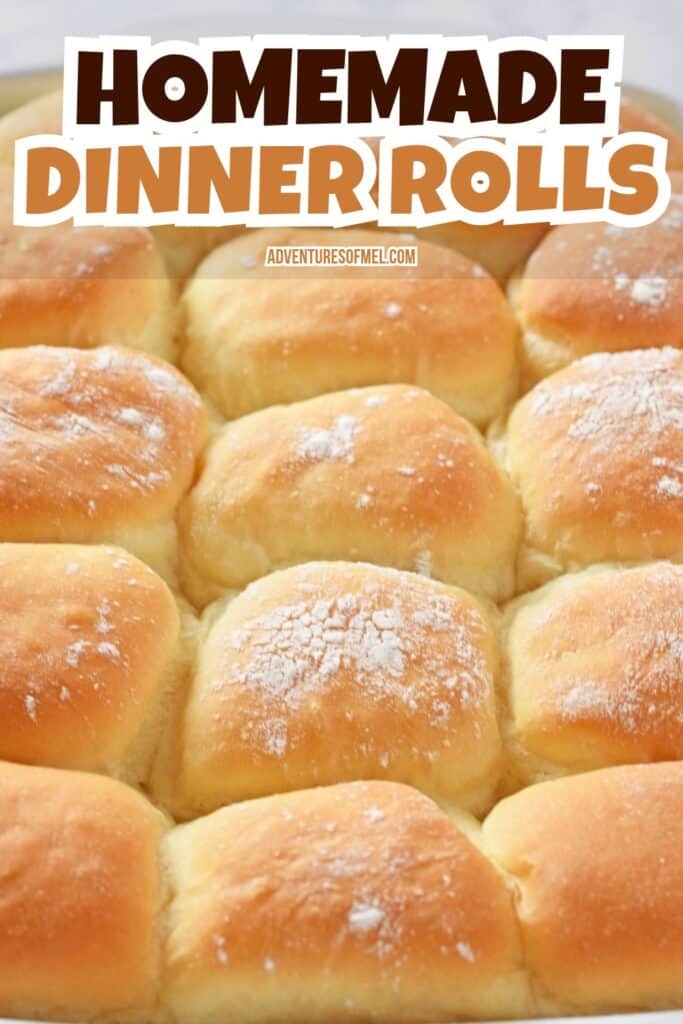
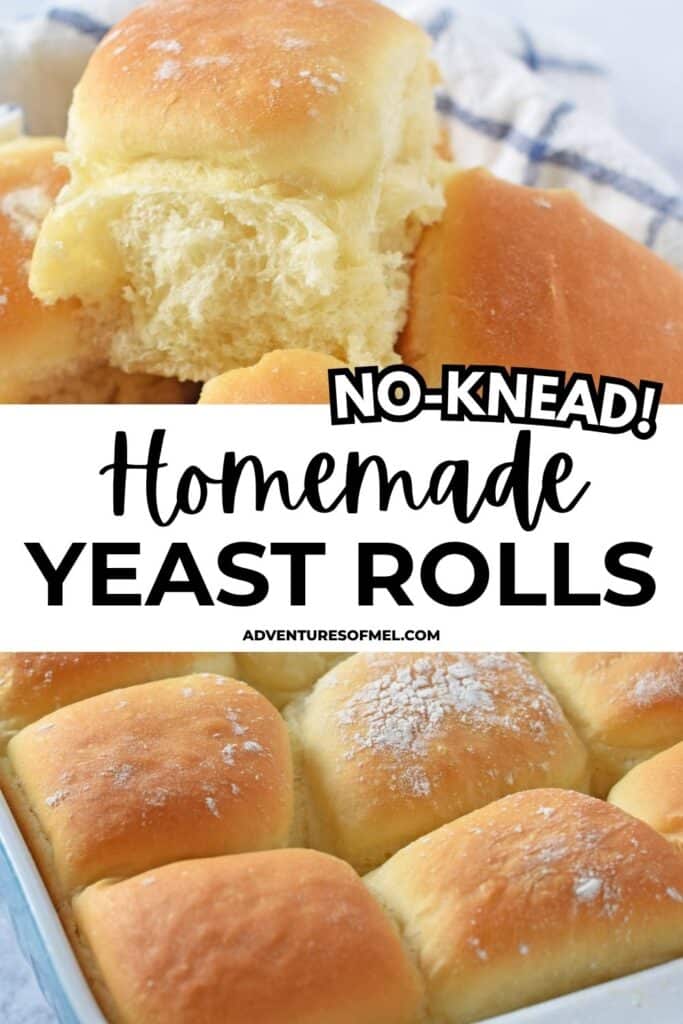
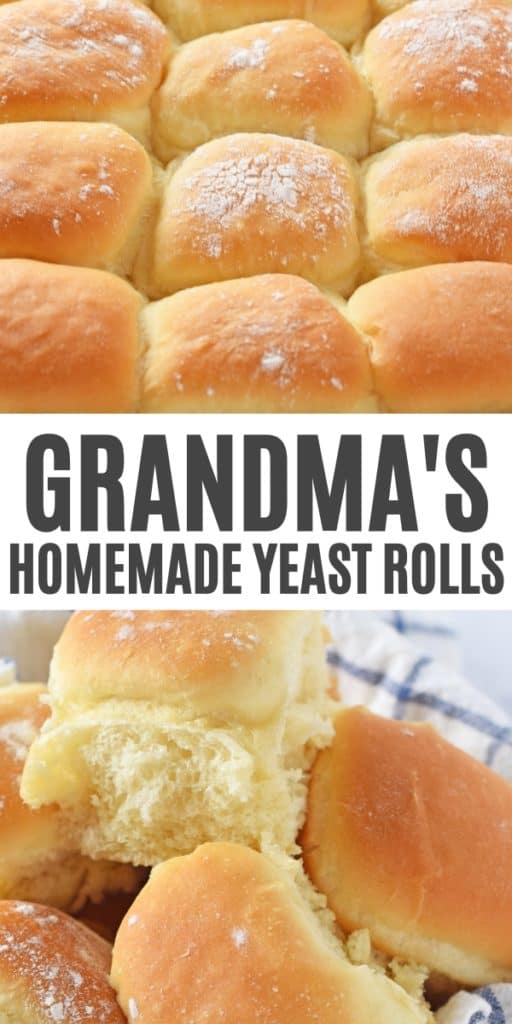
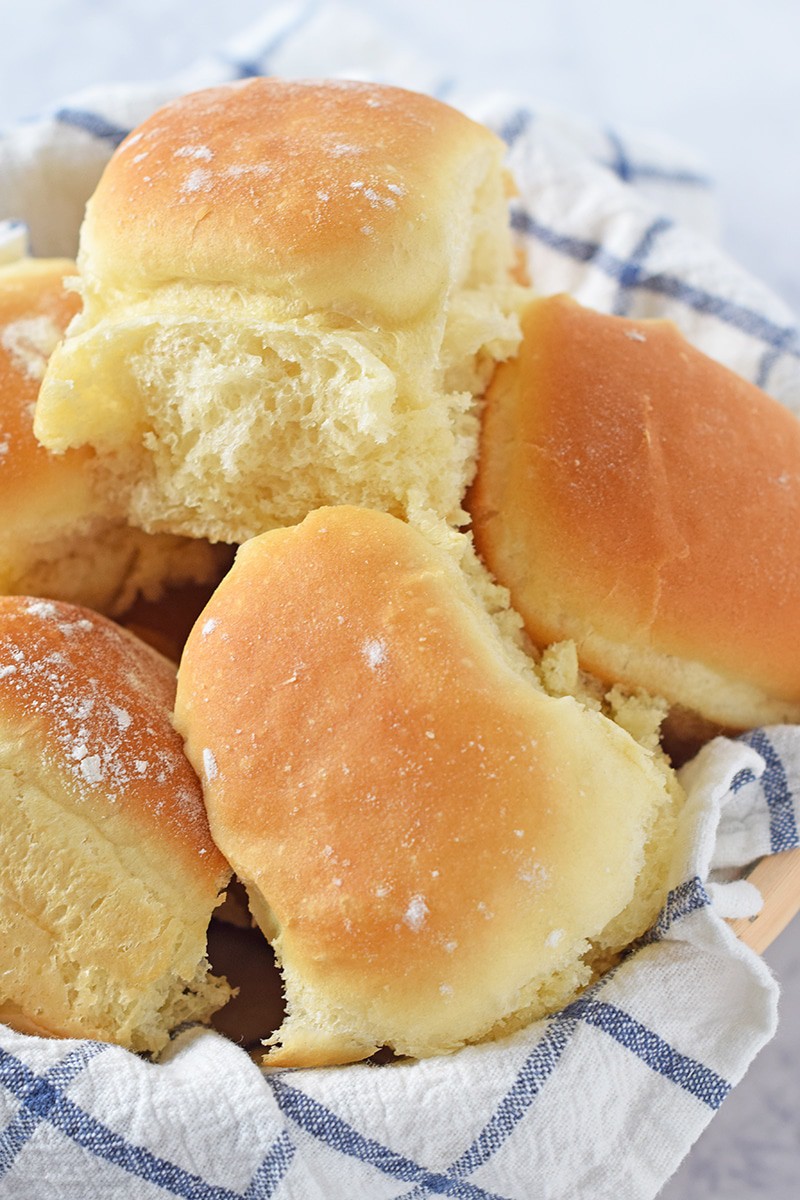
Grandma made the best no-knead, homemade yeast rolls every Thanksgiving, Christmas and Easter. They’re pillowy soft, light, and fluffy, and perfect for beginning bakers with no shaping skills required; simply roll the dough out with a rolling pin, and cut out each roll to fill two 9×9 pans. This is a foolproof recipe, yielding 18 dinner rolls with just a few minutes of hands-on prep time.
These homemade dinner rolls bring back so many memories. I learned how to make this recipe from my mom, and she learned how to make it from her mom. She also taught me how to use the same exact dough to make the most scrumptious cinnamon rolls, with a few extra steps.
⭐️⭐️⭐️⭐️⭐️ “They are amazing!”
“I appreciate you sharing your grandmother’s roll recipe….After looking through the recipes online I realized I had no milk. I noticed your recipe didn’t call for milk so thought what the heck. They are amazing! Will continue to use this recipe….Thanks again.”
-Judy O., Adventures of Mel reader
Why You’ll Love My Grandma’s Yeast Rolls
- Simple homemade yeast rolls: This recipe is definitely not quick, but it is surprisingly easy for beginners with zero kneading required. It relies on pantry staple ingredients, no special equipment needed!
- 4 generations of family tradition: My family has been making it for 4 generations. My grandma taught my mom how to make them, my mom taught me, and now I’ve taught my boys. My oldest makes them better than I do, and his always turn out so light and fluffy.
- Perfect for holiday dinners: We make this recipe for dinner rolls every Thanksgiving, Christmas, and Easter, and sometimes in between. We have to pace ourselves, because some of us will eat rolls with every meal when we have them around.
Ingredient Notes & Substitutions
- Active Dry Yeast – I use active dry yeast, but you can also substitute instant yeast 1:1.
- Cane Sugar – Granulated sugar works too.
- Warm Water – Not too hot, because you don’t want to kill the yeast. You want it slightly warm, almost lukewarm, or about 105ºF to 115ºF.
- Unsalted Butter (softened) – You can also sub shortening if you don’t have unsalted butter. My grandma actually used shortening, and sometimes my mom would use butter shortening.
- Large Eggs – Eggs provide structure and loftiness for light and fluffy dinner rolls.
- All-Purpose Flour – You can use all-purpose flour or bread flour. Bread flour has a higher protein percentage, which means more gluten for more elasticity and stretchability, plus a higher rise. All-purpose flour will give a slightly softer, tighter crumb. It’s totally up to you!
- Sea Salt – Table salt works too.
Pro Tip: I wrote this recipe with 3 eggs and 3 tablespoons of butter because that’s how I learned it. However, my son uses both 1 extra egg and 1 extra tablespoon of butter for an even richer, fluffier bread roll.
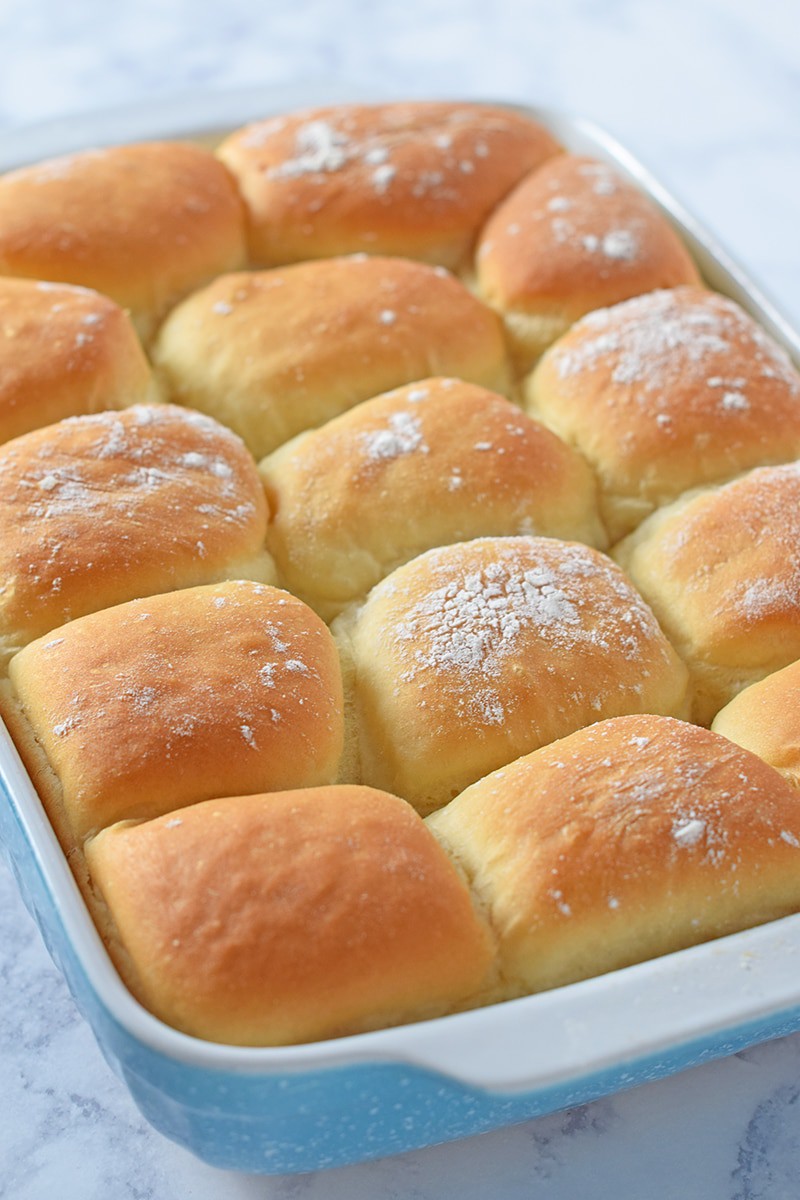
How to Make Grandma’s Homemade Yeast Rolls
First, you’ll need to active the yeast. Then we’ll mix up the dough and let it rise the first time. After that, you’ll roll and cut out the dinner rolls, let them rise the second time, and finally bake them. Grease a large bowl or stock pot with nonstick cooking spray before getting started.
Activate the Yeast
First, let’s make sure the yeast is still good. If it fails to rise, you’ll want to get new yeast before moving on with the rest of this recipe.
- Whisk the yeast and 1/2 teaspoon sugar into 1/2 cup warm water in a glass measuring cup or small bowl.
- Set aside in a warm place to rise and “proof”. It will bubble and rise, doubling in size when it’s ready.
Mix the Dough
While you’re waiting for the yeast mixture to rise, it’s time to mix up the bread dough.
- Cream (or mix together) the sugar and softened unsalted butter in a large mixing bowl.
- Beat in the eggs, one at a time, ’til incorporated.
- Pour the bubbly yeast mixture into the butter mixture, along with an additional 1 1/2 cups warm water.
- Sift together the flour and salt in a separate large bowl, giving it a good stir.
- Add the dry mixture to the wet mixture, and mix for 2-3 minutes until well combined. You can use the dough hook attachment on your electric stand mixer.
- Turn the dough into a large greased bowl or stockpot, cover it with a lightweight kitchen towel, and let it rise until doubled in size. This usually takes 2 to 3 hours.
Shape the Dinner Rolls
Once your dough has doubled in size, it’s time to “shape” your dinner rolls, which really doesn’t require any shaping since the dough is rolled out. Be sure to grease 2 9×9 baking pans so they’re ready to go.
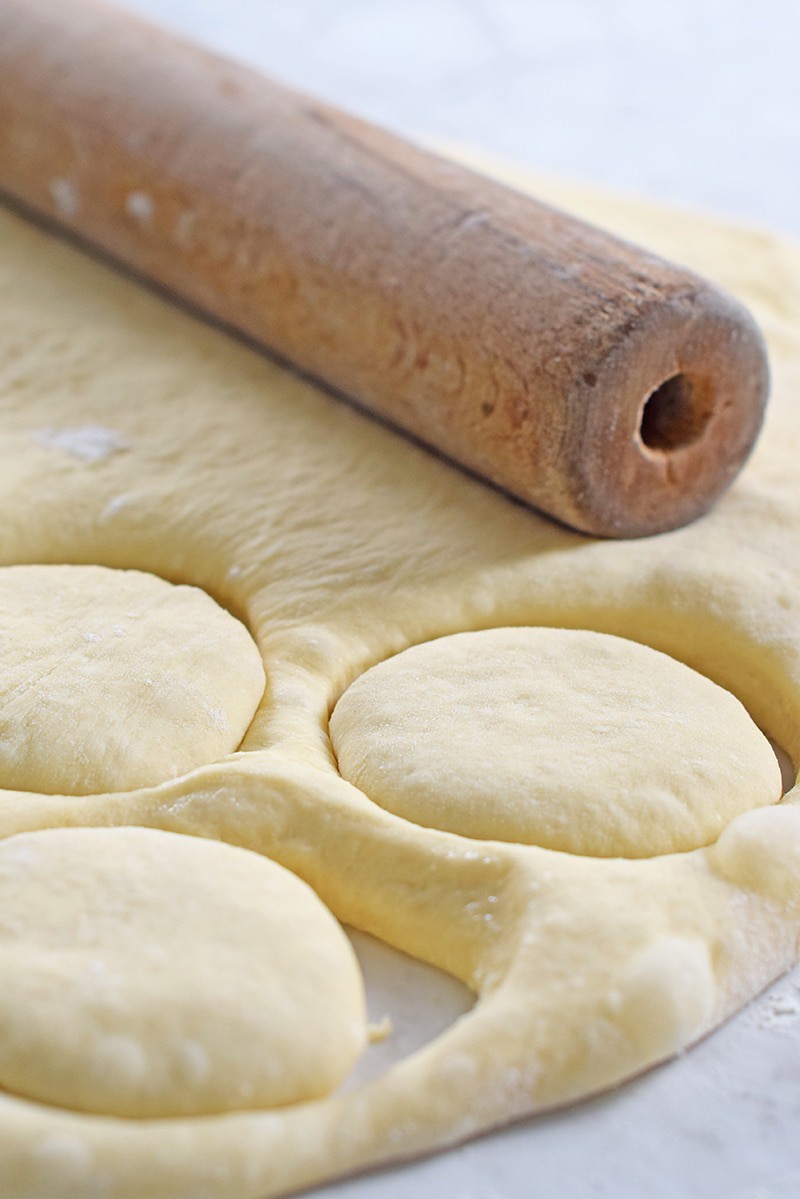
- Turn your risen dough out onto a well-floured work surface (like a countertop). Sprinkle the top generously with flour, and dust your rolling pin so it won’t stick.
- Roll out the dough to about 1-inch thickness.
- Cut round rolls out with a glass, cup, or biscuit cutter. You can use any size, but a 3-inch biscuit cutter will yield 18 rolls from this dough.
- Place the rolls, side by side against each other, in greased baking pans, and let them rise until they’re doubled to tripled in size (this will probably take another 1 to 2 hours).
Pro Tip: Use the indent test to tell when your bread rolls are ready to bake. Once doubled in size, start poking them gently with a finger. If the dough feels dense and springs back right away, give it a little more time; but if the indentation stays and only just slowly springs back, then they’re ready to bake.
Bake the Bread Rolls
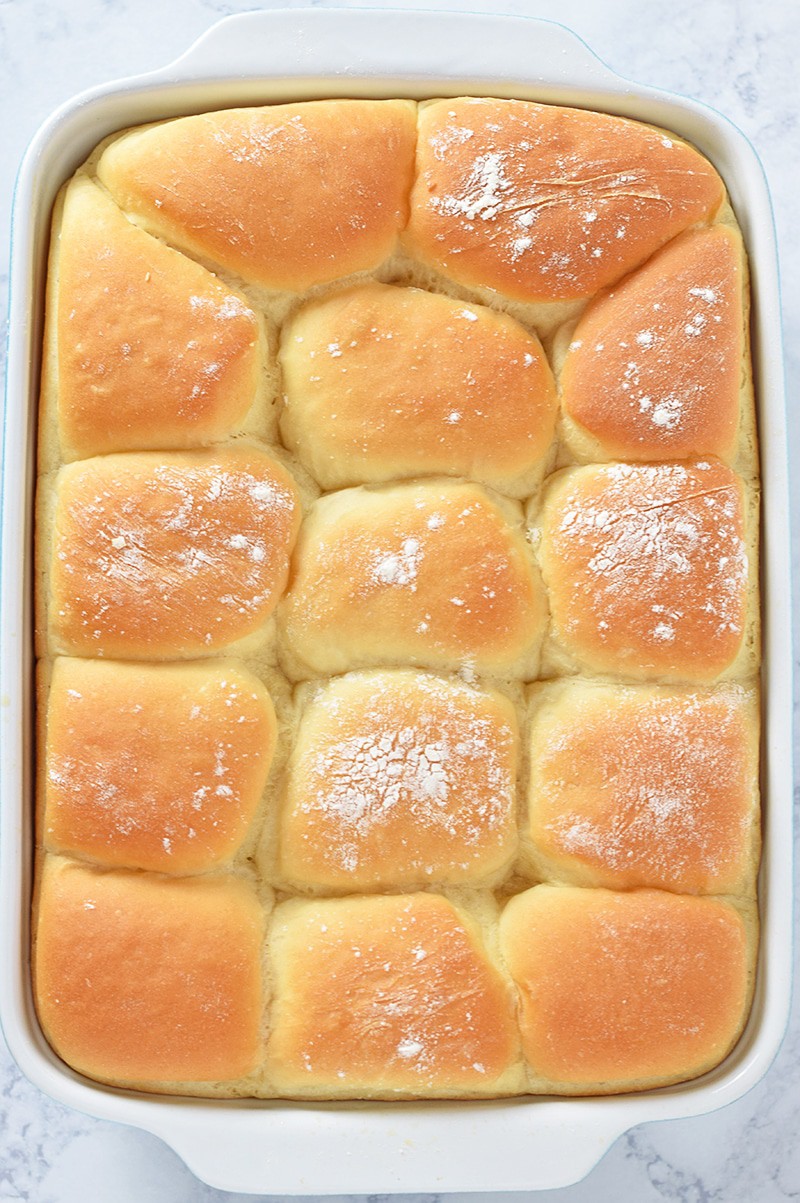
- Bake the rolls for about 20-25 minutes at 350°F. Halfway through, you may need to cover the rolls with foil, so they don’t brown too much before cooking through.
- Remove from the oven and allow them to cool.
From here, you can brush them with melted butter while hot out of the oven, but that’s optional.
Serving Homemade Yeast Rolls
I just can’t resist a warm dinner roll, fresh out of the oven, sliced in half and lathered with homemade salted butter.
- Sweet toppings: Slice in half, then spread with butter and strawberry jam or apple butter.
- Soups & Stews: Use your rolls to dip into a hearty bowl of Instant Pot potato soup.
- Slider sandwiches: Use leftover holiday rolls to make mini Philly cheesesteak sliders or BBQ chicken sliders for lunch or a New Year’s Eve party appetizer.
- Stale, day-old dinner rolls: Leftover rolls that have gone stale make the best old fashioned bread pudding, or you can use them to make apple walnut stuffing for the big dinner.
Expert Tips and Recipe FAQs
This is usually from adding too much flour or not allowing enough rise time (or letting them rise too much). This recipe is great because it doesn’t require any kneading, so you won’t have to add extra flour except for rolling them out. Remember to use the indent test to tell when they’ve risen enough to bake; they should roughly double to triple in volume.
It’s possible your yeast went bad. Make sure it’s in date, and test it first by whisking it into 1/2 cup warm water with 1/2 teaspoon sugar, then set aside in a warm place. If it doesn’t bubble and rise up within a few minutes, you probably need to buy new yeast.
This can happen if you use too much flour, but it can also come from over-baking. At 350ºF, they should only take roughly 20 minutes to bake, maybe a little more. You can poke a knife into the center and kind of look down inside to see if the dough has cooked through.
Yes, you can make them ahead of time. In fact, I often mix up the dough and it rise the first time the day before Thanksgiving. Shape them, place them into your pan, and cover it with plastic wrap before transferring to the fridge overnight. Thanksgiving morning, pull them out, remove the plastic wrap and let them finish rising ’til they’re ready to bake right before dinner.
Once completely cooled, store them in a plastic bag or airtight container on the counter at room temperature for 3 to 5 days. They’ll last longer in the fridge, but it’s not necessary.
Yes, you can freeze them. You can freeze them immediately after shaping, unbaked, in a disposable foil baking pan with a lid. Let them thaw out overnight in the fridge, then let them rise like normal before baking. You can also freeze them after baking in a freezer bag or airtight container. Unbaked dough will last up to 4 weeks, while fully baked rolls will last up to 3 months in the freezer.

More Bread Recipes:
- Quick and easy hot dog bun breadsticks
- Buttermilk cornbread with milled corn
- Easy homemade biscuits from scratch
If you try this recipe, why not leave a star rating in the recipe card right below and/or a review in the comment section further down the page? I always appreciate your feedback. You can also follow me on Pinterest, Facebook, Instagram, and YouTube. And subscribe to my email list too!
Grandma’s Homemade Yeast Rolls
Equipment
- Stockpot or large bowl
- 3-inch Biscuit Cutter or large glass
Ingredients
- 1 tablespoon active dry yeast
- 1 teaspoon cane sugar
- 1/2 cup warm water 105ºF to 115ºF
- 2/3 cup cane sugar
- 3 tablespoons unsalted butter* softened
- 3 large eggs*
- 1 1/2 cups warm water
- 6 cups all-purpose flour
- 3 teaspoons sea salt
Instructions
- Whisk together the yeast, sugar, and warm water in a glass measuring cup or small bowl. Set aside in a warm place to rise. It will bubble and rise up.
- While waiting for the yeast mixture to rise, cream (or mix together) the sugar and unsalted butter in a large mixing bowl.
- Beat in the eggs, one at a time.
- Add the bubbly yeast mixture to the butter mixture, along with an additional 1 1/2 cups warm water.
- In a separate bowl, sift the flour and salt together.
- Gradually add the flour mixture into the wet ingredients, and mix well. You can use the dough hook on your electric stand mixer.
- Turn the dough into a large greased bowl or stockpot, and let it rise to the top or almost to the top (it can take 2 to 3 hours to double in size). Cover with a lightweight kitchen towel.
- Once the dough has risen, turn it out onto a generously floured work surface.
- Roll it out to about 1-inch thickness.
- Then cut round rolls with a cup, glass, or biscuit cutter.
- Place the rolls, side by side against each other (it's okay if they're touching), in greased baking pans, and let them rise 'til doubled to tripled. It'll take another 1 to 2 hours.*
- Pre-heat the oven to 350° F.
- Bake for about 20 minutes to 25 minutes at 350°F. Halfway through baking, you may need to cover the rolls with foil, so they don't brown too much on top before baking through.
- Remove the rolls from the oven and allow them to cool. Optionally, you can brush the tops with melted butter while still hot.
- Slice in half, spread with softened butter, and enjoy!








Beautiful rolls. My dough was pretty thin but I didn’t add more flour since I didn’t know if it should be thin. I didn’t roll it but just pinched balls and baked them like that. You can’t tell they weren’t rolled and it was much easier. I will do that again. I am lazy. An impressive thing to take to a party. Thanks
Awesome tasty buns. I even ate some of the dough
That’s great, Lenora!
Can you refrigerate overnight for the second rise, if so should I remove early in the morning to warm to room temp before baking ?
Stoney, my son actually regularly refrigerates the dough overnight during the first rise, although he has never tried it on the second rise. It really tastes a lot better that way, and it’s more convenient. He mixes it up and let’s it rise a little over halfway on the counter before throwing it in the fridge overnight. He pulls it out the next morning, rolls it out, cuts out the bread rolls, and then he let’s them rise the second time on the countertop before baking. I hope this helps!
How far in advance can you make these?